

Digital marketing tools are software and platforms that help businesses promote products and services online by managing campaigns
Finding the top 10 digital marketing tools worth your investment can feel overwhelming when there are thousands of options promising to revolutionize your marketing strategy. I’ve spent countless hours testing various platforms only to discover that most fall short of their ambitious claims.
However, with the right digital marketing tools, I’ve managed to double my ROI without requiring a massive budget. In fact, tools like Ahrefs’ free SEO suite have transformed my keyword research, link building, and SEO audit processes. Similarly, platforms such as Mailchimp have proven indispensable for email marketing due to their powerful features and cost-effectiveness.
Throughout this article, I’ll share the specific tools that actually delivered results across website development, SEO, content creation, social media management, and automation. Additionally, I’ll explain how solutions like Zapier helped me build customized systems that significantly scaled my marketing efforts without adding more team members.
Top Website and SEO Tools That Boosted My ROI
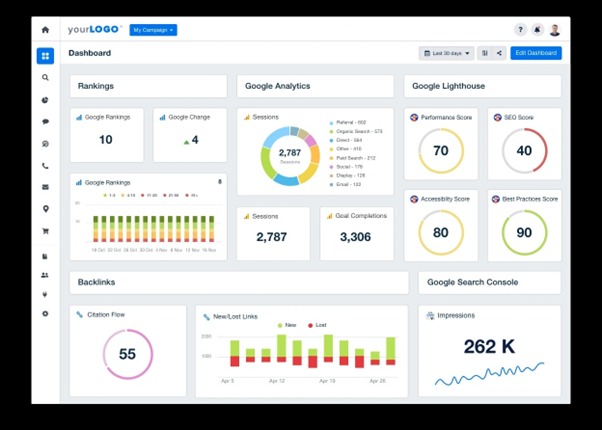
After extensive testing across numerous platforms, I found two particular website and SEO tools that genuinely moved the needle for my digital marketing ROI: Wix for website building and Ahrefs for SEO research.
The secret to my website success has been Wix’s comprehensive SEO infrastructure. First, Wix automatically generates SEO-friendly meta tags, robots.txt files, and structured data markup for all my pages. Moreover, the platform creates and maintains an XML sitemap that stays updated with all my site content and pages. What truly sets Wix apart is its server-side rendering capability, allowing search engines to fully read my site content and improve indexing.
For businesses targeting local customers, Wix’s Google Business Profile integration proved particularly valuable. This feature allowed me to manage my business listing, connect with customers from Google Search and Maps, and gain valuable insights to improve visibility—all directly from my dashboard.
Meanwhile, Ahrefs transformed my keyword strategy with its exceptional data quality. Their database allowed me to track backlinks and research keywords with precision. While using their Keywords Explorer tool, I discovered thousands of keyword opportunities, complete with metrics like keyword difficulty and traffic potential.
One standout feature that improved my ROI was Ahrefs’ ability to filter through high-difficulty keywords where “weak” websites rank at the top—these became my quick-win targets. Furthermore, their side-by-side SERP comparison helped me identify ranking changes and opportunities.
Though Ahrefs previously had higher pricing barriers, they introduced a more accessible Starter plan in 2025 at ₹2,447.03/month, making it feasible even for smaller marketing budgets. Their backlink checker proved particularly powerful for almost any backlink research task, helping me build a stronger link profile that directly improved my search rankings.
Content and Social Media Tools That Delivered Results
Content creation and social media management became the next focus of my digital marketing strategy after establishing a solid website and SEO foundation. Through extensive testing, I identified two exceptional digital marketing tools that delivered measurable ROI: Canva and Buffer.
Canva transformed my team’s content creation capacity with its AI-powered design tools. The results were impressive – organizations using Canva reported a 60% increase in content creation in just one month, 10 days saved monthly on social media content creation, and a remarkable 66% reduction in design turnaround time.
What makes Canva stand out among digital marketing tools is its comprehensive functionality. The platform’s Magic Write feature generates copy in seconds, while Magic Switch instantly resizes designs for multiple platforms. With access to 100M+ premium media elements and 600k+ customizable templates, my team created professional-looking graphics without design expertise.
Consequently, I paired Canva with Buffer to streamline my social media workflow. Buffer’s scheduling capabilities allowed me to publish content across 11 different social platforms, including newer networks like Threads and Bluesky. The platform’s AI Assistant became instrumental in generating post ideas, repurposing content, and creating variations for A/B testing.
Notably, Buffer’s analytics provided actionable insights rather than just data, showing me the optimal times, formats, and frequencies for posting. This intelligence-driven approach enabled me to tag and recycle top-performing content, essentially creating an efficiency loop that consistently improved results.
For longer-form content, I incorporated Writesonic into my toolkit. Its AI Article Writer generated factually accurate, SEO-optimized blog posts in just 2 minutes, which I then fine-tuned before publishing. This approach helped maintain a consistent publishing schedule without sacrificing quality.
The integration between these tools created a seamless content pipeline – designing in Canva, scheduling through Buffer, and producing blog content via Writesonic – that significantly boosted engagement while reducing my team’s workload.
Automation and Lead Management Tools That Scaled My Efforts
The real breakthrough in doubling my marketing ROI came through strategic automation and intelligent lead management. Unlike manual processes that consume countless hours, these digital marketing tools allowed me to scale operations without expanding my team.
HubSpot’s marketing automation platform became the central engine of my lead nurturing system. Within one year of implementation, I experienced a 129% increase in lead acquisition and 36% higher deal closure rates. What made HubSpot especially powerful was its ability to create personalized workflows that delivered the right content to prospects based on their specific behaviors and interests.
At the same time, Mailchimp’s automation capabilities transformed my email marketing strategy. The platform’s Customer Journey Builder allowed me to design multi-step sequences triggered by specific customer actions. Beyond just scheduling emails, I could integrate data from third-party apps and adjust messaging based on real-time engagement metrics.
For connecting all these tools together, Zapier proved indispensable. This integration platform essentially became the digital glue holding my marketing ecosystem together. By linking my CRM, email marketing, and social media tools, I automated lead capture and follow-ups that previously required manual attention. One particularly valuable Zap automatically routed qualified leads to appropriate sales team members based on criteria like geography and industry.
The results were striking – my time to value shrunk by over 40%, as leads moved through the sales pipeline more efficiently. Additionally, I saved approximately 9 hours monthly on data compilation tasks that Zapier now handled automatically.
The email marketing component alone delivered exceptional ROI, generating INR 3,206.46 in revenue for every INR 84.38 spent. This effectiveness stems from email marketing being 40 times more powerful at converting customers than social media platforms like Facebook or Twitter.
These automation tools ultimately allowed me to focus on strategy rather than repetitive tasks, creating a scalable system that continues to drive growth.